Georgia Upper Cervical Chiropractic
- info@georgiauppercervical.com
- 11027 Ball Ground HWY, GA 30107

Upper Cervical Care for Migraines and Headaches in Atlanta
Headache and migraine are often used interchangeably, but they’re not the same thing. A headache is a symptom, pain anywhere in the head or face, while a migraine is a distinct neurological condition with its own set of triggers, phases, and warning signs.
Georgia Upper Cervical is a cervical chiropractor based in Ball Ground, GA, serving patients across the greater Atlanta area. Below, you’ll find what causes headaches and migraines, the different types, how they’re diagnosed, and how our upper cervical care fits alongside your medical treatment.
What Are Migraines & Headaches?
A headache is pain or pressure anywhere in the head or face, and it’s about as universal a symptom as they come. Cleveland Clinic estimates that 96% of people will experience at least one headache in their lifetime, and most are primary headaches, meaning they aren’t caused by an underlying medical condition.
So what is a migraine, exactly? A migraine is a neurological condition, not just a severe headache, and it affects an estimated 12% of people in the U.S. A migraine headache typically causes throbbing, one-sided pain lasting anywhere from four to seventy-two hours, often paired with nausea, vomiting, and sensitivity to light, sound, or smell. Migraines also tend to run in families: up to 80% of people with migraines have a close biological relative with the condition.
Some migraines cause dizziness or a spinning sensation instead of, or in addition to, head pain, a subtype called vestibular migraine that can overlap with other causes of dizziness and vertigo.
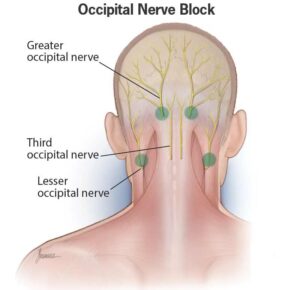
The Four Phases of a Migraine Attack
Not everyone experiences all four phases, but recognizing them can help you catch an attack early.
- Prodrome: mood changes, fatigue, food cravings, and neck stiffness, sometimes appearing up to 24 hours before the headache starts.
- Aura: visual disturbances like flashing lights or blind spots, lasting 5 to 60 minutes, in about a third of migraine sufferers.
- Headache (Attack): throbbing pain, nausea, and sensitivity to light and sound, lasting 4 to 72 hours.
- Postdrome: fatigue, lingering neck stiffness, and difficulty concentrating for hours after the pain subsides.
Types of Headaches
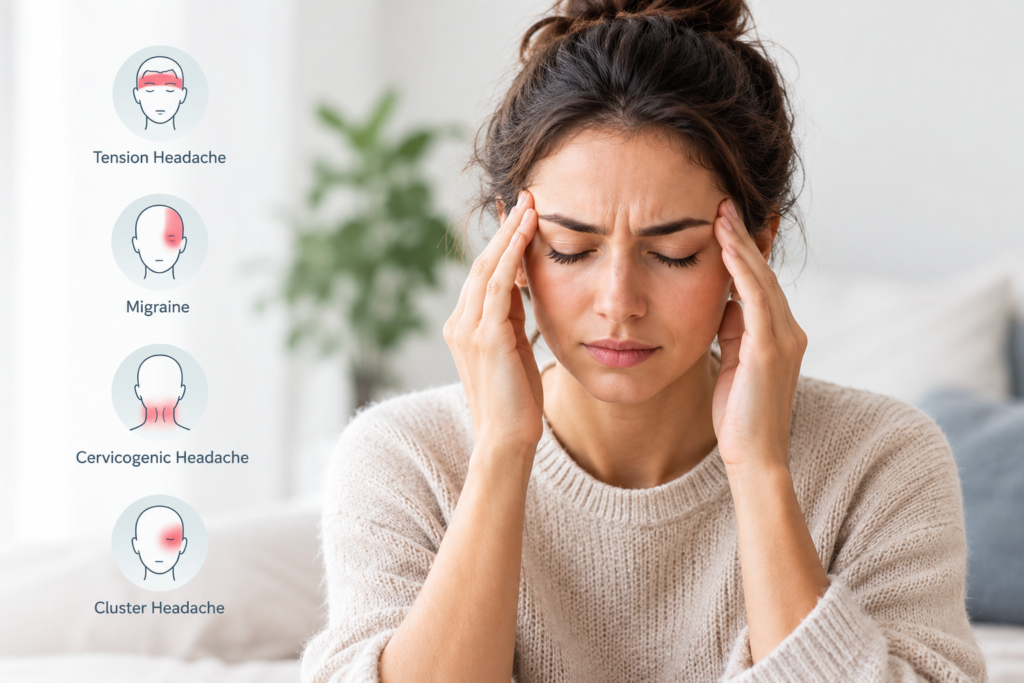
Not all head pain is the same, and knowing which type you’re dealing with is the first step toward the right treatment. Headaches are generally grouped into a handful of types:
Tension Headache
The most common type by far, affecting more than 70% of people who get episodic headaches. It feels like a tight band of pressure across the forehead and temples, often tied to stress, poor posture, or muscle tension in the neck and shoulders.
Migraine
A neurological condition rather than a headache subtype. There are several types of migraines, including migraine with aura, migraine without aura, chronic migraine (15 or more headache days a month), and vestibular migraine, which causes dizziness alongside or instead of head pain.
Cluster Headache
Rare, affecting roughly 1 in 1,000 people. Cluster headaches cause severe, one-sided pain that occurs in cycles, often at the same time each day for weeks or months, along with watery eyes and nasal congestion on the affected side.
Cervicogenic Headache
A secondary headache that starts in the neck rather than the head itself. Pain is typically one-sided, radiating from the base of the skull forward, and often comes with restricted neck pain or reduced range of motion. It’s the type most directly tied to upper cervical alignment.
- Sudden, severe pain described as “the worst headache of your life”
- Pain that peaks in intensity within about 60 seconds
- Numbness, weakness, or slurred speech
- Sudden vision changes or confusion
- A headache following a head injury, or with fever and a stiff neck
Understanding the Root Causes of Headaches & Migraines
What causes headaches and what causes migraines aren’t always the same question. Ordinary tension headaches are usually driven by everyday factors: stress, dehydration, poor posture, eye strain, and tight muscles in the neck and shoulders. Migraine causes are less fully understood, but research points to a strong genetic component along with triggers like hormonal changes, disrupted sleep, certain foods, and sensory stimuli such as bright lights or strong smells.
There’s also a structural piece that’s often overlooked. Misalignment in the upper cervical spine, the top two vertebrae at the base of the skull, can refer pain into the head and is one of the more commonly reported signs of atlas misalignment. Cleveland Clinic also notes that neck stiffness is a recognized prodrome symptom that can appear before a migraine attack even begins, which is part of why the neck and head are so closely linked.
Migraine vs. Headache: What's the Difference?
Every migraine involves head pain, but not every headache is a migraine. A headache is a symptom that can come from dozens of causes, while a migraine is a diagnosable neurological condition with its own phases, triggers, and treatment approach. The distinction matters because what works for a tension headache, like an over-the-counter pain reliever, often isn’t enough for a migraine, and vice versa.
Ready to Find Relief from Your Headaches or Migraines?
We’re currently accepting new patients at our Ball Ground office, serving as your chiropractor in Atlanta and the surrounding area.
Who Gets Migraines & Headaches, and Why It Matters
Headaches and migraines affect people of every age, but a few patterns stand out in who’s most likely to experience them and why.
Women
Women are significantly more likely than men to experience migraines, largely tied to hormonal fluctuations, with many patients noticing a pattern around their menstrual cycle.
People with a Family History of Migraine
Migraines tend to run in families. Up to 80% of people with migraines have a first-degree relative with the condition, suggesting a strong genetic component.
People Recovering from Head or Neck Trauma
Whiplash and other injuries from car accidents can trigger cervicogenic headaches or contribute to post-concussion syndrome-related head pain.
People with Chronic Neck Tension or Poor Posture
Prolonged phone or computer use, desk posture, and general neck pain are common contributors to both tension-type and cervicogenic headaches.
Headaches and migraines are common, but frequent or worsening symptoms are worth a real evaluation rather than just reaching for more medication.

Migraine & Headache Symptoms
Migraine symptoms and general headache symptoms overlap in some ways, but a few signs of a migraine headache tend to set it apart from an ordinary headache:
Head Pain & Sensory
Throbbing, often one-sided pain, sensitivity to light, sound, or smell, and visual disturbances like flashing lights (aura).
Whole-Body
Nausea, vomiting, fatigue, and in some cases dizziness, all of which tend to worsen with physical activity during a migraine attack.
Neck & Posture-Related
Neck stiffness before or after an attack, limited range of motion, and pain that starts at the base of the skull, often a sign of a cervicogenic component.
How Are Migraines & Headaches Diagnosed?
There’s no single lab test for migraines or most headache types. Diagnosis relies on a combination of history and exam findings:
- Symptom and medical history review: frequency, duration, triggers, and family history of migraine.
- Physical and neurological exam: checking reflexes, vision, and coordination to rule out other causes.
- Neck and cervical spine evaluation: assessing mobility and referred pain patterns, especially when a cervicogenic cause is suspected.
- Imaging (CT or MRI): used selectively to rule out secondary causes, not as a routine step for a typical migraine diagnosis.

Migraine Treatments
Migraine treatments range from over-the-counter pain relievers to prescription medication, and for some patients, addressing structural contributors in the neck. The right combination depends on how often headaches occur and what’s actually driving them:
Acute Medications
Triptans, NSAIDs, and anti-nausea medication used to treat an individual attack as it happens.
Preventive Medications
Beta-blockers, antiseizure drugs, or monoclonal antibodies prescribed for frequent or chronic migraines.
Lifestyle & Trigger Management
Consistent sleep, hydration, stress management, and identifying personal food or environmental triggers.
Upper Cervical Chiropractic Care
Gentle correction of upper cervical alignment for tension-type and cervicogenic headaches with a neck-related component.
Can a Chiropractor Help with Migraines & Headaches?
Migraine Chiropractor in Atlanta
If you’ve been searching for a headache chiropractor, upper cervical chiropractic care can offer real support, especially when neck tension or misalignment is part of what’s driving your symptoms. For migraines specifically, it works well as a complement to your medical care, since migraine is a neurological condition that often benefits from its own dedicated treatment plan alongside upper cervical care.
Where a chiropractor for migraines can help most is with cervicogenic headaches and migraines that have a clear cervical component, tension and misalignment in the neck that can trigger or worsen head pain. At Georgia Upper Cervical, we focus on the alignment of the top two vertebrae in your neck, close to the nerves that can refer pain into the head.
Because a misalignment here can also show up as other signs of atlas misalignment, we start every case with a full evaluation to confirm upper cervical care is the right fit for your specific symptoms.
What to Expect at Georgia Upper Cervical

- A full history, including when your headaches or migraines started and what triggers them
- 3D imaging to assess alignment in the head and neck
- A personalized care plan built around your specific type of headache or migraine
- Coordination with your physician or neurologist when a migraine or other neurological cause is suspected
Why Patients Choose Georgia Upper Cervical
Georgia Upper Cervical Chiropractic has spent more than 10 years treating patients across North Georgia using Orthospinology, a precise, imaging-guided approach to upper cervical care. Dr. Ryan Klopfer, the practice’s founder, holds a Doctorate of Chiropractic from Life University and trained under Dr. James Ken Humber Jr., one of the field’s most respected Orthospinologists. Every case begins with a 3-D imaging and diagnostic system that pinpoints the exact misalignment before any adjustment is made. For patients dealing with migraines and headaches, the focus is on identifying cervicogenic contributions, misalignments in the upper neck that can affect nerve and blood flow patterns tied to headache frequency and severity.
10+ Years
200+
98%
What Our Patients Are Saying
 Posted on Google
 Della Gill
Trustindex verifies that the original source of the review is Google.
I had an excellent experience with this upper cervical specialist. From the moment I walked in, the care felt personalized and attentive. They really focused on what would make the biggest impact for my recovery, rather than taking a one-size-fits-all approach. Erica at the front desk was incredibly kind and welcoming, which set the tone right away. Dr. Klopfer took the time to listen, explain everything clearly, and never made me feel rushed during my visits. Most importantly, I’ve had great results and am feeling so much better after my car accident. I’m truly grateful for the level of care I received and would highly recommend them to anyone looking for thoughtful, targeted treatment.Posted on Google Clint WeatherbyProfessional and dedicated to my care.Posted on Google
 SouthernBasement1I have been visiting Ryan Klopfer at Georgia Upper Cervical since 2020, because of back issues which started in my 30’s. I was looking for instrument assisted chiropractic adjustments, which is very different from the hit or miss “neck cracking” which did not always work for me. Yes, there are other ways to get an adjustment. From the very first meeting with Ryan, he was very attentive and great at listening, never gave me the sense he was in a hurry or that I was holding him up, and I really felt that he was empathetic and truly cared. He explained his chiropractic process and expressed to me that his goal is not to create patients who require regular ongoing visits, but to actually address root causes, and hopefully see his patients less and less as time goes on. In the five years since that time, that’s exactly how things have gone for me and my wife. I sometimes have issues and I may need to see him semi regularly for a few weeks, then several months may go by and I’m perfectly fine and won’t see him for a while. I could go on, but to keep the review brief, I cannot recommend Ryan Klopfer more highly! Far away the best chiropractor my wife and I have ever worked with, and we both consider him a good friend as well.Posted on Google
 KalynFrom the moment you walk through the door to when you leave, the office is warm and inviting. Dr. Ryan and his assistant, Erica, are very knowledgeable and explain things in a way that makes it all easy to understand and why their adjustments work. They keep my body running in perfect harmony—I have fewer headaches, less illness and continued ease of mobility and flexibility from seeing this practice regularly. I am so grateful for their services and giving such a great alternative to modern medicine. Added bonus: after I get my adjustment, they offer what I call a “zen room”, where I lay back in a zero gravity chair, in a minimally lit room, with soft music playing and Erica gently places a nice heavy blanket on top for added coziness—sitting in that room for about 15 minutes is often the highlight of my busy week!Posted on Google
 Melissa LeCourI am so incredibly thankful I found Dr. Klopfer. From the very first visit, I could tell he genuinely cares about his patients and takes the time to really listen. His approach is completely different from the typical “quick crack and go” experience. He carefully evaluates your specific needs and creates a customized care plan that is truly tailored to you. After just one visit and a shockwave therapy session with Erica, my lower back pain was gone. I was honestly shocked at how fast I felt relief. It was life changing for me. Now we’re working on my neck, and I’m already seeing such encouraging results. I am convinced that Erica works miracles in the shockwave room! What I appreciate most is that their goal isn’t to keep you coming in forever — it’s to help you heal and feel better so you can come in less often. That says so much about their integrity and the way Dr. Klopfer runs his practice. If you’re in pain and looking for someone who truly cares and delivers real results, I wholeheartedly recommend Dr. Klopfer. I’m so grateful for the difference he’s made for me. ????Posted on Google
 vickie hAfter suffering for years with lower back and hip pain, I was very skeptical that anyone could help me. After one visit with Dr. Ryan Klopfer I was improved. After five weeks of weekly treatment I am very pleased with my progress. It's a process and I'm committed to it, and Dr. Ryan and Erica are doing a great job!Posted on Google
 Scott PooleDr. Ryan and really helped my get my pain controlled. I’m over 50 and have never gone to a chiropractor before. Dr. Ryan’s upper cervical approach is nothing like what I expected (crazy contortions and feeling like my neck was being broken). His use of X-rays, machines, and gentle adjustments led to great results!Posted on Google
 knablemDr Ryan does an excellent job of creating alignment without cracking and is consistent in his approach to overall healthcare.
Frequently Asked Questions
How long do migraines last?
The headache phase of a migraine typically lasts four to seventy-two hours if untreated. Including the prodrome and postdrome phases that can come before and after, the full episode can stretch over several days.
Can chiropractors help with migraine headaches?
It depends on the cause. Upper cervical chiropractic care may help with migraines that have a cervicogenic or tension-related component, but it isn’t a treatment for migraine as a neurological condition and isn’t a substitute for medical management.
Can a chiropractor help with tension headaches?
Often, yes. Tension headaches are frequently tied to muscle tension and misalignment in the neck and shoulders, which makes them one of the headache types most likely to respond to upper cervical chiropractic care.
What does a migraine feel like?
Most people describe a migraine as throbbing or pulsing pain, often on one side of the head, that worsens with physical activity, light, sound, or smell. It’s frequently accompanied by nausea and, in some cases, visual disturbances called aura.
How do you get rid of a migraine?
Resting in a dark, quiet room, staying hydrated, and using acute medication early in an attack can help manage symptoms. There’s no universal cure, but for migraines with a cervical component, addressing neck alignment may reduce frequency or severity over time.
What causes headaches?
Most headaches are primary headaches caused by everyday factors like stress, dehydration, poor posture, eye strain, or muscle tension in the neck and shoulders, rather than an underlying medical condition.
What causes migraines?
Migraine causes aren’t fully understood, but genetics play a major role. Up to 80% of people with migraines have a close relative with the condition. Common triggers include hormonal changes, disrupted sleep, certain foods, stress, and sensory stimuli like bright lights or strong smells.
Sources +
- "Migraine." Cleveland Clinic, my.clevelandclinic.org/health/diseases/5005-migraine-headaches. Accessed 4 Sept. 2026.
- "Headache." Cleveland Clinic, my.clevelandclinic.org/health/diseases/9639-headaches. Accessed 4 Sept. 2026.
- "Tension Headache." Cleveland Clinic, my.clevelandclinic.org/health/diseases/8257-tension-headaches. Accessed 4 Sept. 2026.
- "Cluster Headache." Cleveland Clinic, my.clevelandclinic.org/health/diseases/5003-cluster-headaches. Accessed 4 Sept. 2026.
- "Cervicogenic Headache." Cleveland Clinic, my.clevelandclinic.org/health/diseases/cervicogenic-headache. Accessed 4 Sept. 2026.
- "Thunderclap Headaches." Cleveland Clinic, my.clevelandclinic.org/health/symptoms/17876-thunderclap-headaches. Accessed 4 Sept. 2026.
- "The Timeline of a Migraine Attack." American Migraine Foundation, americanmigrainefoundation.org/resource-library/timeline-migraine-attack/. Accessed 4 Sept. 2026.
Take the First Step Toward Headache and Migraine Relief
Don’t think you need to live with constant headaches or migraines. For gentle and customized care that targets the root cause of your pain, trust the friendly and highly-skilled team of professional chiropractors at Georgia Upper Cervical in Ball Ground.
Book your appointment today and start your journey toward lasting relief from headaches and migraines.