Georgia Upper Cervical Chiropractic
- info@georgiauppercervical.com
- 11027 Ball Ground HWY, GA 30107
Upper Cervical Care for POTS & Dysautonomia in Atlanta
Dysautonomia and POTS (postural orthostatic tachycardia syndrome) are conditions that affect how your autonomic nervous system regulates heart rate, blood pressure, and other functions your body normally handles without your input.
Georgia Upper Cervical is an upper cervical chiropractor serving the greater Atlanta area, with our office based in Ball Ground, GA. We work with patients managing dysautonomia and POTS as part of a broader care plan, focusing specifically on upper cervical chiropractic care and its relationship to autonomic nervous system function. Below, you’ll find what these conditions are, who they affect, how POTS is diagnosed, and how our care fits alongside your medical treatment.
This page is for informational purposes only and isn’t a substitute for medical advice, diagnosis, or treatment from a qualified physician._
What Is Dysautonomia?
Dysautonomia is an umbrella term for conditions that affect the autonomic nervous system (ANS), the part of your nervous system that runs the functions you don’t consciously think about: heart rate, blood pressure, digestion, and temperature control. When the ANS misfires, those everyday functions become unpredictable, which is why dysautonomia and POTS can look so different from one person to the next.
POTS dysautonomia is the most researched and most commonly diagnosed form, though several other types exist.
Dysautonomia is generally grouped into two categories: primary and secondary. Primary dysautonomia, including POTS, develops on its own with no identifiable underlying cause. Secondary dysautonomia develops as a result of another condition, such as diabetes, an autoimmune disease, Parkinson’s disease, or a prior viral illness, damaging the nerves that regulate the autonomic nervous system.
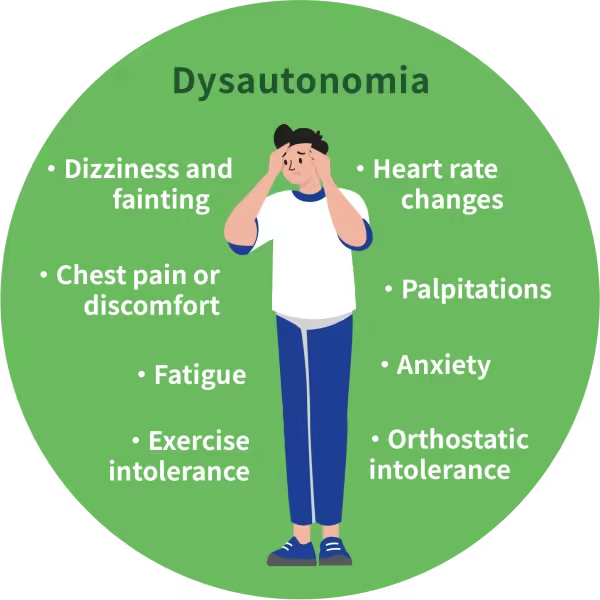
Types of Dysautonomia
POTS (Postural Orthostatic Tachycardia Syndrome)
The most common type of dysautonomia, causing an abnormal spike in heart rate when moving from lying or sitting to standing. Affects an estimated 1 to 3 million people in the U.S., roughly 80–85% of them women, according to Dysautonomia International.
Neurocardiogenic Syncope
Fainting or near-fainting triggered by a sudden drop in blood pressure or heart rate, especially common in adolescents and older adults.
Orthostatic Intolerance
Difficulty tolerating an upright position, causing dizziness, fatigue, or nausea that eases when lying down.
Other Types
Pure autonomic failure, multiple system atrophy, familial dysautonomia, and baroreflex failure, which are rarer and often follow a more progressive course.
What Is POTS (Postural Orthostatic Tachycardia Syndrome)?
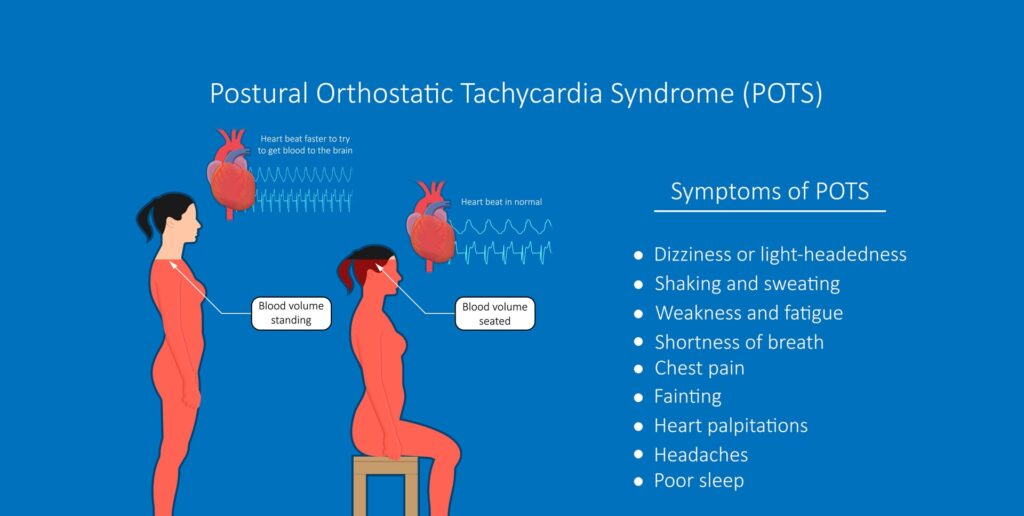
So what is POTS disease, exactly? POTS causes your heart rate to spike abnormally fast when you move from lying or sitting to standing, as your autonomic nervous system struggles to adjust blood flow against gravity. It’s formally defined by a heart rate increase of at least 30 beats per minute in adults, or 40 in adolescents, within the first 10 minutes of standing, without the drop in blood pressure seen in simple orthostatic hypotension.
Symptoms often flare with heat, prolonged standing, intense exercise, illness, or hormonal changes. Researchers have identified three underlying patterns:
Neuropathic POTS
Reduced nerve supply to blood vessels in the legs, so blood pools in the lower body and the heart compensates by beating faster.
Hyperadrenergic POTS
An overactive fight-or-flight response floods the body with adrenaline on standing, often causing tremors and a sharper heart rate spike.
Hypovolemic POTS
Lower-than-normal blood volume, which is why increasing fluid and sodium intake is a common first-line approach for this subtype.
Dysautonomia vs. POTS: Is Dysautonomia the Same as POTS?
Not quite. Dysautonomia is the broader category, and POTS is one specific, well-studied condition within it. If you’ve been told you have “dysautonomia symptoms,” POTS is one of several possible explanations, and a proper workup is what narrows it down.
Ready to Get to the Root of Your Symptoms?
We’re currently accepting new patients at our Ball Ground office.
Who Gets POTS, and Why It Matters
POTS affects an estimated 1 to 3 million people in the U.S., roughly 80–85% of them women. While it’s often associated with teens, nearly half of patients develop their first symptoms after age 18.
Risk factors include family history, autoimmune conditions, connective tissue disorders, and a preceding trigger like illness or pregnancy. Because symptoms are easy to dismiss and hard to pin down, research suggests the average time to an accurate diagnosis is nearly 6 years, and many patients report being told their symptoms were psychological before POTS was identified.
Teens & Young Women (Ages 15–50)
The group most commonly affected. Some research suggests roughly 1 in 100 teenagers develops POTS before adulthood.
Post-Viral & Post-COVID Patients
A viral illness is one of the most common triggers reported before symptom onset.
Patients with EDS, Autoimmune Conditions, or a Family History
POTS frequently shows up alongside Ehlers-Danlos syndrome, lupus, Sjögren’s syndrome, and fibromyalgia.

POTS Symptoms
Recognizing a symptom of POTS disease early can make a real difference in how quickly you get answers. The most frequently reported POTS symptoms fall into three groups:
Cardiovascular
Rapid heartbeat, palpitations, fainting or near-fainting.
Neurological
Brain fog, difficulty concentrating, headaches or migraines, dizziness when standing.
Whole-Body
Persistent fatigue, excessive sweating, sleep disruption, nausea, pale/blotchy skin, numbness or tingling.
How Is POTS Diagnosed?
If you suspect you should be evaluated for POTS, here’s what the process typically looks like:
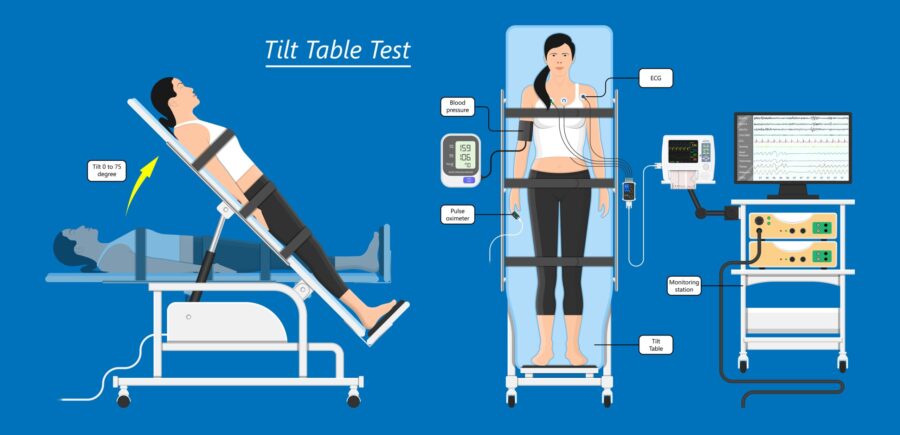
- Tilt table test: measures how your heart rate and blood pressure respond as you're moved from lying flat to upright.
- In-office standing test: a simpler check that can flag the condition early.
- Bloodwork and urine tests: help rule out other causes.
- Autonomic function testing: identifies which type of POTS you're dealing with.
Diagnosis should be made by a physician, typically a cardiologist or neurologist familiar with autonomic disorders.
Dysautonomia and POTS Treatment Options
When people search for dysautonomia treatment or POTS treatment, they’re usually looking for what actually helps day to day. There’s currently no single cure, but the most effective POTS treatment options combine a few approaches:
Lifestyle Changes
Increased fluid and sodium intake, compression garments, and reclined or gradual exercise programs.
Medications
Beta-blockers or fludrocortisone, prescribed and managed by a physician.
Physical Therapy
Programs focused on autonomic reconditioning.
Can a Chiropractor Help with POTS?
Chiropractic care isn’t a treatment for POTS or dysautonomia on its own, and it isn’t a substitute for the medical management above. What an upper cervical chiropractor can offer is a complementary layer of care.
At Georgia Upper Cervical, we focus on the alignment of the top two vertebrae in your neck, an area close to the brainstem and vagus nerve. Some patients report that upper cervical care, alongside their medical treatment, supports how they feel day to day, though it isn’t a treatment for the autonomic dysfunction underlying POTS itself. It’s the same upper cervical chiropractic approach we use with patients throughout the greater Atlanta area, from our office in Ball Ground.
What to Expect at Georgia Upper Cervical
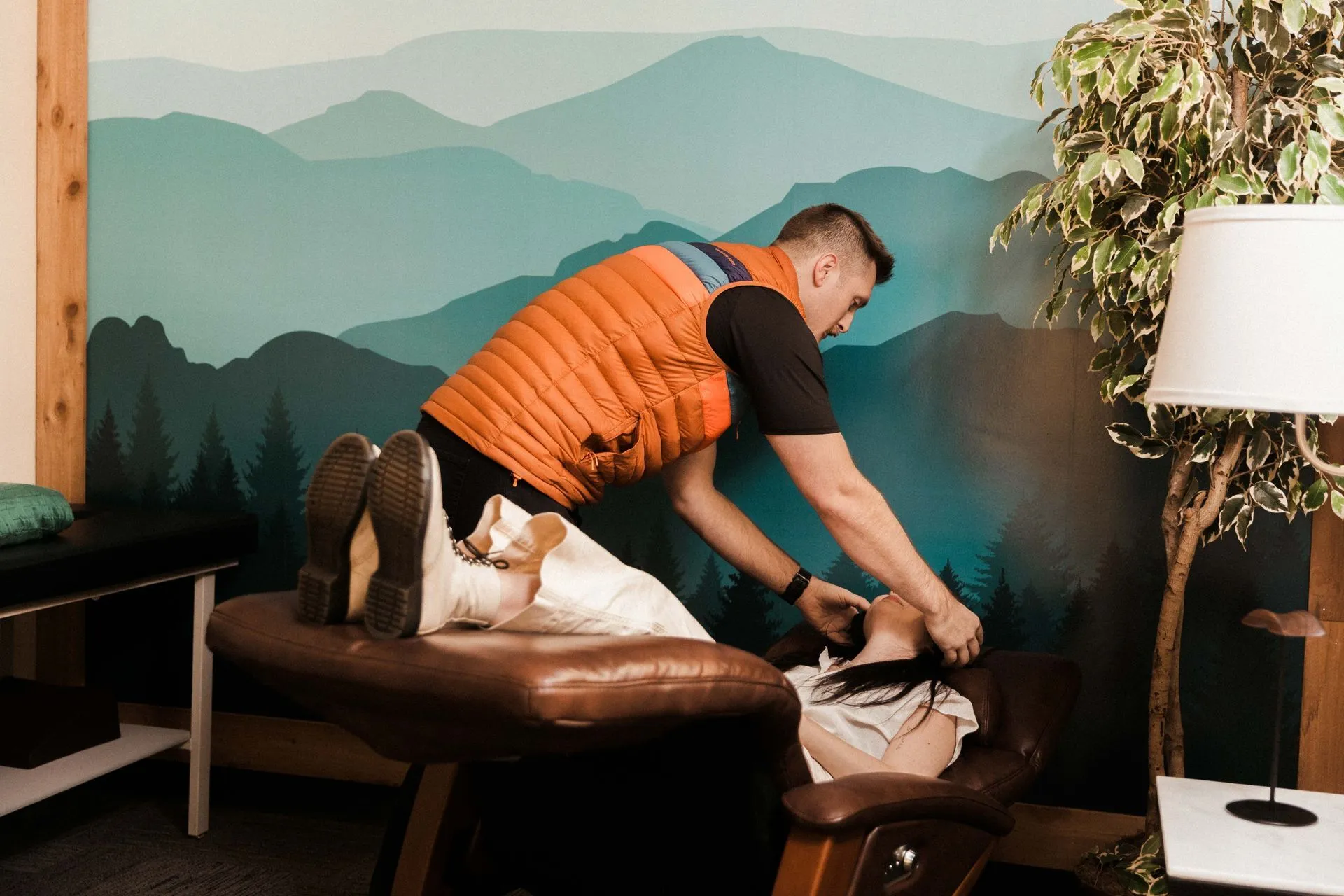
- We start with a full history and understand how your symptoms show up day to day
- 3D imaging to assess alignment in the head and neck
- A personalized care plan built around your case, including any comorbidities like EDS or fibromyalgia
- Regular check-ins to track how you're responding
What Our Patients Are Saying
 Posted on Google
 Della Gill
Trustindex verifies that the original source of the review is Google.
I had an excellent experience with this upper cervical specialist. From the moment I walked in, the care felt personalized and attentive. They really focused on what would make the biggest impact for my recovery, rather than taking a one-size-fits-all approach. Erica at the front desk was incredibly kind and welcoming, which set the tone right away. Dr. Klopfer took the time to listen, explain everything clearly, and never made me feel rushed during my visits. Most importantly, I’ve had great results and am feeling so much better after my car accident. I’m truly grateful for the level of care I received and would highly recommend them to anyone looking for thoughtful, targeted treatment.Posted on Google Clint WeatherbyProfessional and dedicated to my care.Posted on Google
 SouthernBasement1I have been visiting Ryan Klopfer at Georgia Upper Cervical since 2020, because of back issues which started in my 30’s. I was looking for instrument assisted chiropractic adjustments, which is very different from the hit or miss “neck cracking” which did not always work for me. Yes, there are other ways to get an adjustment. From the very first meeting with Ryan, he was very attentive and great at listening, never gave me the sense he was in a hurry or that I was holding him up, and I really felt that he was empathetic and truly cared. He explained his chiropractic process and expressed to me that his goal is not to create patients who require regular ongoing visits, but to actually address root causes, and hopefully see his patients less and less as time goes on. In the five years since that time, that’s exactly how things have gone for me and my wife. I sometimes have issues and I may need to see him semi regularly for a few weeks, then several months may go by and I’m perfectly fine and won’t see him for a while. I could go on, but to keep the review brief, I cannot recommend Ryan Klopfer more highly! Far away the best chiropractor my wife and I have ever worked with, and we both consider him a good friend as well.Posted on Google
 KalynFrom the moment you walk through the door to when you leave, the office is warm and inviting. Dr. Ryan and his assistant, Erica, are very knowledgeable and explain things in a way that makes it all easy to understand and why their adjustments work. They keep my body running in perfect harmony—I have fewer headaches, less illness and continued ease of mobility and flexibility from seeing this practice regularly. I am so grateful for their services and giving such a great alternative to modern medicine. Added bonus: after I get my adjustment, they offer what I call a “zen room”, where I lay back in a zero gravity chair, in a minimally lit room, with soft music playing and Erica gently places a nice heavy blanket on top for added coziness—sitting in that room for about 15 minutes is often the highlight of my busy week!Posted on Google
 Melissa LeCourI am so incredibly thankful I found Dr. Klopfer. From the very first visit, I could tell he genuinely cares about his patients and takes the time to really listen. His approach is completely different from the typical “quick crack and go” experience. He carefully evaluates your specific needs and creates a customized care plan that is truly tailored to you. After just one visit and a shockwave therapy session with Erica, my lower back pain was gone. I was honestly shocked at how fast I felt relief. It was life changing for me. Now we’re working on my neck, and I’m already seeing such encouraging results. I am convinced that Erica works miracles in the shockwave room! What I appreciate most is that their goal isn’t to keep you coming in forever — it’s to help you heal and feel better so you can come in less often. That says so much about their integrity and the way Dr. Klopfer runs his practice. If you’re in pain and looking for someone who truly cares and delivers real results, I wholeheartedly recommend Dr. Klopfer. I’m so grateful for the difference he’s made for me. ????Posted on Google
 vickie hAfter suffering for years with lower back and hip pain, I was very skeptical that anyone could help me. After one visit with Dr. Ryan Klopfer I was improved. After five weeks of weekly treatment I am very pleased with my progress. It's a process and I'm committed to it, and Dr. Ryan and Erica are doing a great job!Posted on Google
 Scott PooleDr. Ryan and really helped my get my pain controlled. I’m over 50 and have never gone to a chiropractor before. Dr. Ryan’s upper cervical approach is nothing like what I expected (crazy contortions and feeling like my neck was being broken). His use of X-rays, machines, and gentle adjustments led to great results!Posted on Google
 knablemDr Ryan does an excellent job of creating alignment without cracking and is consistent in his approach to overall healthcare.
Frequently Asked Questions
Can a chiropractor help with POTS?
Chiropractic care doesn’t cure POTS, but upper cervical correction may help support the nervous system function connected to autonomic regulation for some patients, typically as a complement to medical treatment rather than a replacement for it.
How is POTS diagnosed?
The standard diagnostic tool is a tilt table test, which tracks heart rate and blood pressure changes when you move from lying down to standing. Bloodwork and autonomic function testing may follow to confirm the diagnosis and rule out other causes.
Is dysautonomia the same as POTS?
No. Dysautonomia is a broad umbrella term for autonomic nervous system disorders, and POTS is the most common specific condition within that category. All POTS is dysautonomia, but not all dysautonomia is POTS.
What causes POTS?
The exact mechanism isn’t fully understood, but POTS involves blood pooling in the lower body on standing, along with elevated stress hormones and reduced blood vessel response. It’s grouped into a few recognized patterns: neuropathic, hyperadrenergic, hypovolemic, and secondary POTS linked to an underlying condition like an autoimmune disorder.
How long does it typically take to get diagnosed with POTS?
Diagnostic delays are common. On average, patients wait nearly 6 years for an accurate diagnosis, and a large share are told their symptoms are psychological before POTS is identified. This is part of why a thorough, POTS-specific workup matters.
Can POTS be cured?
No. There’s currently no cure for POTS, but most patients see meaningful symptom improvement through a combination of lifestyle changes, medication, and physical therapy managed by a physician.
Is POTS considered a disability?
It depends on the individual case. The ADA doesn’t list specific conditions as automatic disabilities. POTS may qualify if it substantially limits a major life activity, which is assessed case by case. This isn’t legal advice; anyone considering accommodations or disability benefits should consult an attorney or the relevant agency directly.
Sources +
- "Postural Orthostatic Tachycardia Syndrome (POTS)." Cleveland Clinic, my.clevelandclinic.org/health/diseases/16560-postural-orthostatic-tachycardia-syndrome-pots. Accessed 28 Aug. 2026.
- "Dysautonomia." Cleveland Clinic, my.clevelandclinic.org/health/diseases/6004-dysautonomia. Accessed 28 Aug. 2026.
- "Postural Orthostatic Tachycardia Syndrome (POTS)." Johns Hopkins Medicine, www.hopkinsmedicine.org/health/conditions-and-diseases/postural-orthostatic-tachycardia-syndrome-pots. Accessed 28 Aug. 2026.
- "10 Facts Doctors Should Know About POTS." Dysautonomia International, www.dysautonomiainternational.org/page.php?ID=180. Accessed 28 Aug. 2026.
- "Postural Orthostatic Tachycardia Syndrome (POTS)." Job Accommodation Network, askjan.org/disabilities/Postural-Orthostatic-Tachycardia-Syndrome-POTS.cfm. Accessed 28 Aug. 2026.
Ready to Talk It Through?
If you're navigating a new EDS diagnosis or looking for care that understands hypermobile and fragile connective tissue, our team at Georgia Upper Cervical is here to listen and explain honestly whether upper cervical care fits into your plan.