Georgia Upper Cervical Chiropractic
- info@georgiauppercervical.com
- 11027 Ball Ground HWY, GA 30107
Upper Cervical Care for Ehlers-Danlos Syndrome in Atlanta
Ehlers-Danlos syndrome (EDS) is a group of genetic connective tissue disorders that affect how your body produces collagen, leading to joint hypermobility, skin fragility, and chronic pain.
Georgia Upper Cervical is an upper cervical chiropractor serving the greater Atlanta area, with our office based in Ball Ground, GA. We work with patients managing EDS as part of a broader care plan, using a gentle, imaging-guided approach suited to hypermobile and fragile tissue rather than forceful manipulation. Below, you’ll find what EDS is, its main forms, how it’s diagnosed, and how our care fits alongside your medical team.
This page is for informational purposes only and isn’t a substitute for medical advice, diagnosis, or treatment from a qualified physician or geneticist.
What Is Ehlers-Danlos Syndrome?
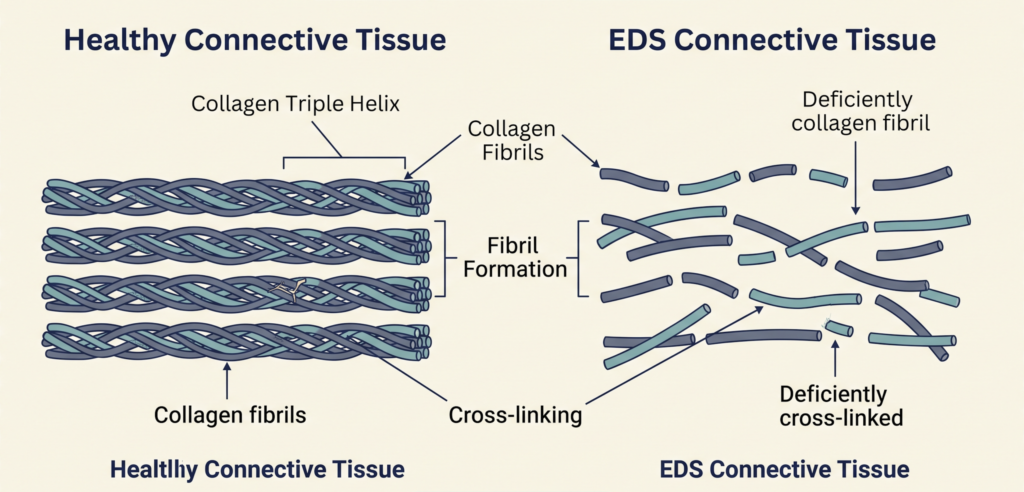
Ehlers-Danlos syndrome is a group of 13 genetic connective tissue disorders caused by changes in how the body produces or processes collagen, the protein that gives structure and strength to skin, joints, blood vessels, and organs.
Connective tissue does more than hold your body together. It’s found in the walls of blood vessels and organs, in ligaments and tendons, and just beneath the skin, which is why when collagen doesn’t form properly, EDS symptoms can show up across so many different parts of the body at once.
The 13 current types were established under the 2017 International Classification of EDS, which replaced older, more limited classification systems. Each type is linked to a different gene, and most are tied to a specific collagen type: Vascular EDS primarily involves type III collagen, while Classical EDS involves types I and V. Hypermobile EDS remains the only type without an identified genetic cause.
Forms of Ehlers-Danlos Syndrome
Hypermobile EDS (hEDS)
The most common form, accounting for roughly 90% of cases. Causes widespread joint hypermobility and chronic pain. Unlike other types, there’s currently no genetic test for hEDS, so diagnosis is clinical.
Classical EDS (cEDS)
Occurs in roughly 1 in 20,000 to 40,000 people. Involves highly stretchy, fragile skin prone to significant scarring, alongside joint hypermobility.
Vascular EDS (vEDS)
The most serious form, affecting an estimated 1 in 100,000 to 200,000 people. Blood vessels and organs are directly involved, carrying up to an 80% risk of a life-threatening complication, such as an arterial or organ rupture, by age 40, according to The Ehlers-Danlos Society. Requires close medical monitoring.
Other Types
Ten additional rare forms exist, including kyphoscoliotic, arthrochalasia, and dermatosparaxis EDS, each affecting fewer than 1 in 1 million people.
Ehlers-Danlos Syndrome Symptoms
What are the symptoms of Ehlers-Danlos syndrome? They vary by type, but generally fall into a few categories:

What Is Ehlers-Danlos Syndrome?
Yes. EDS is inherited, though the pattern varies by type. Most forms are autosomal dominant, meaning one copy of the altered gene is enough to cause it, while a few rarer types are autosomal recessive.
Over 20 different gene variants have been linked to EDS so far. Hypermobile EDS is the exception: it clearly runs in families, but the specific gene responsible hasn’t been identified yet.
Ready to Find Care That Understands Your Body?
We’re currently accepting new patients at our Ball Ground office.
Who Gets EDS, and Why It Matters
EDS affects people of every background, but a few patterns stand out in who gets diagnosed and how long it takes to get there.
Women
Over 70% of people diagnosed with EDS and related hypermobility disorders are women, a mix of real biological factors (hormonal influence on symptom severity) and a pattern of women’s symptoms being dismissed or misdiagnosed longer than men’s.
People with a Family History
Because most forms are inherited, a parent, sibling, or child with EDS raises the likelihood of a diagnosis.
People Diagnosed at Any Age
Symptoms often start in childhood, but many people aren’t accurately diagnosed until adulthood.
The average time to an accurate EDS diagnosis is 10 to 12 years, and many patients receive around 10 misdiagnoses first. An accurate diagnosis is the first step toward a care plan that actually fits.

How Is Ehlers-Danlos Syndrome Diagnosed?
Wondering how Ehlers-Danlos is diagnosed? Here’s what the process typically looks like:
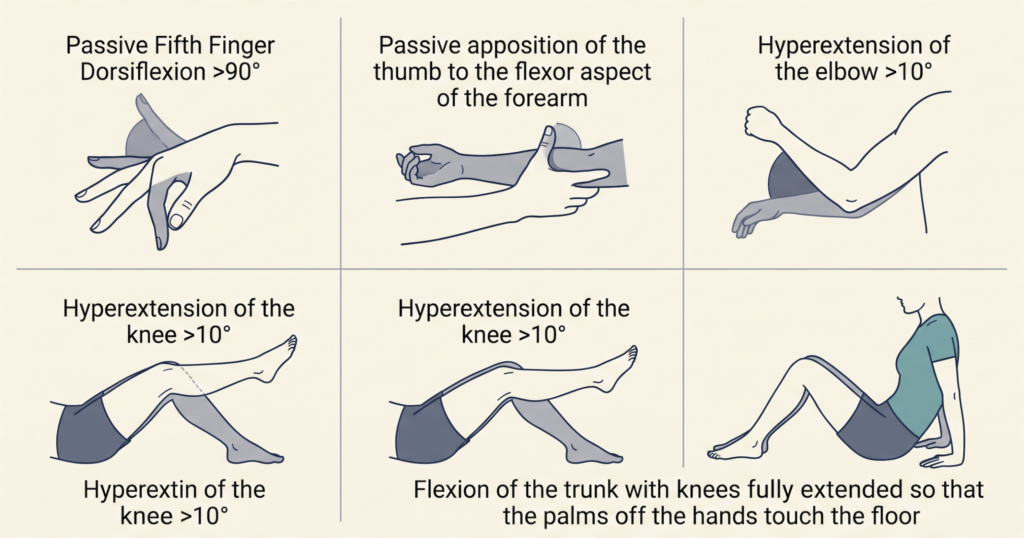
- Clinical evaluation: a physical exam assessing joint flexibility, often using the Beighton scoring system for hypermobility.
- Skin and tissue assessment: checking for stretchiness, fragility, or unusual scarring.
- Family and medical history: since most EDS types are inherited.
- Genetic testing: confirms diagnosis for most types, though hEDS is currently diagnosed clinically since no gene has been identified.
Diagnosis and genetic testing are performed by a physician or geneticist, not by our office.
Ehlers-Danlos Syndrome Treatments & Therapies
There’s no cure for EDS, but the right combination of treatments and therapies can meaningfully improve day-to-day function:
Chiropractic Care
Gentle, imaging-guided upper cervical care may offer supportive joint stability for some patients, when cleared by their physician or geneticist.
Physical Therapy
Builds muscle support around unstable joints without overstretching already-loose connective tissue.
Pain Management
Addresses chronic joint and tissue pain, often coordinated with a rheumatologist or pain specialist.
Bracing & Support
Stabilizes joints prone to dislocation or subluxation.
Can a Chiropractor Help with Ehlers-Danlos Syndrome?
At Georgia Upper Cervical, we take a different approach than traditional spinal manipulation, one built specifically for hypermobile and fragile connective tissue rather than in spite of it.
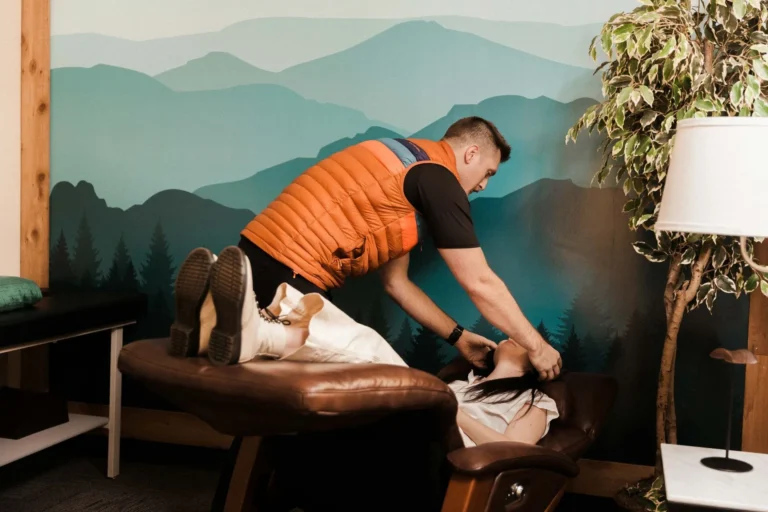
Instead of the high-velocity adjustments used at many chiropractic offices, we use precise, imaging-guided assessment and gentle, low-force upper cervical correction, which makes our approach a better fit for patients managing joint instability from EDS. Chiropractic care won’t reverse the underlying connective tissue changes behind EDS, but for many patients, upper cervical chiropractic care can be a supportive part of managing joint stability and pain.
Because EDS varies so much by type, we start by understanding your specific diagnosis and history, and for patients with vascular EDS or significant joint instability, we coordinate with your physician or geneticist before beginning any hands-on care. That’s simply part of how we practice responsibly with a population like this one.
What to Expect at Georgia Upper Cervical
- Clinical evaluation: a physical exam assessing joint flexibility, often using the Beighton scoring system for hypermobility.
- Skin and tissue assessment: checking for stretchiness, fragility, or unusual scarring.
- Family and medical history: since most EDS types are inherited.
- Genetic testing: confirms diagnosis for most types, though hEDS is currently diagnosed clinically since no gene has been identified.
What Our Patients Are Saying
 Posted on Google
 Della Gill
Trustindex verifies that the original source of the review is Google.
I had an excellent experience with this upper cervical specialist. From the moment I walked in, the care felt personalized and attentive. They really focused on what would make the biggest impact for my recovery, rather than taking a one-size-fits-all approach. Erica at the front desk was incredibly kind and welcoming, which set the tone right away. Dr. Klopfer took the time to listen, explain everything clearly, and never made me feel rushed during my visits. Most importantly, I’ve had great results and am feeling so much better after my car accident. I’m truly grateful for the level of care I received and would highly recommend them to anyone looking for thoughtful, targeted treatment.Posted on Google Clint WeatherbyProfessional and dedicated to my care.Posted on Google
 SouthernBasement1I have been visiting Ryan Klopfer at Georgia Upper Cervical since 2020, because of back issues which started in my 30’s. I was looking for instrument assisted chiropractic adjustments, which is very different from the hit or miss “neck cracking” which did not always work for me. Yes, there are other ways to get an adjustment. From the very first meeting with Ryan, he was very attentive and great at listening, never gave me the sense he was in a hurry or that I was holding him up, and I really felt that he was empathetic and truly cared. He explained his chiropractic process and expressed to me that his goal is not to create patients who require regular ongoing visits, but to actually address root causes, and hopefully see his patients less and less as time goes on. In the five years since that time, that’s exactly how things have gone for me and my wife. I sometimes have issues and I may need to see him semi regularly for a few weeks, then several months may go by and I’m perfectly fine and won’t see him for a while. I could go on, but to keep the review brief, I cannot recommend Ryan Klopfer more highly! Far away the best chiropractor my wife and I have ever worked with, and we both consider him a good friend as well.Posted on Google
 KalynFrom the moment you walk through the door to when you leave, the office is warm and inviting. Dr. Ryan and his assistant, Erica, are very knowledgeable and explain things in a way that makes it all easy to understand and why their adjustments work. They keep my body running in perfect harmony—I have fewer headaches, less illness and continued ease of mobility and flexibility from seeing this practice regularly. I am so grateful for their services and giving such a great alternative to modern medicine. Added bonus: after I get my adjustment, they offer what I call a “zen room”, where I lay back in a zero gravity chair, in a minimally lit room, with soft music playing and Erica gently places a nice heavy blanket on top for added coziness—sitting in that room for about 15 minutes is often the highlight of my busy week!Posted on Google
 Melissa LeCourI am so incredibly thankful I found Dr. Klopfer. From the very first visit, I could tell he genuinely cares about his patients and takes the time to really listen. His approach is completely different from the typical “quick crack and go” experience. He carefully evaluates your specific needs and creates a customized care plan that is truly tailored to you. After just one visit and a shockwave therapy session with Erica, my lower back pain was gone. I was honestly shocked at how fast I felt relief. It was life changing for me. Now we’re working on my neck, and I’m already seeing such encouraging results. I am convinced that Erica works miracles in the shockwave room! What I appreciate most is that their goal isn’t to keep you coming in forever — it’s to help you heal and feel better so you can come in less often. That says so much about their integrity and the way Dr. Klopfer runs his practice. If you’re in pain and looking for someone who truly cares and delivers real results, I wholeheartedly recommend Dr. Klopfer. I’m so grateful for the difference he’s made for me. ????Posted on Google
 vickie hAfter suffering for years with lower back and hip pain, I was very skeptical that anyone could help me. After one visit with Dr. Ryan Klopfer I was improved. After five weeks of weekly treatment I am very pleased with my progress. It's a process and I'm committed to it, and Dr. Ryan and Erica are doing a great job!Posted on Google
 Scott PooleDr. Ryan and really helped my get my pain controlled. I’m over 50 and have never gone to a chiropractor before. Dr. Ryan’s upper cervical approach is nothing like what I expected (crazy contortions and feeling like my neck was being broken). His use of X-rays, machines, and gentle adjustments led to great results!Posted on Google
 knablemDr Ryan does an excellent job of creating alignment without cracking and is consistent in his approach to overall healthcare.
Frequently Asked Questions
How is Ehlers-Danlos diagnosed?
Most types are confirmed through genetic testing alongside a physical exam. Hypermobile EDS is the exception: it’s currently diagnosed clinically, often using the Beighton scoring system, since no genetic marker has been identified yet.
Is Ehlers-Danlos an autoimmune disorder?
No. EDS is a genetic connective tissue disorder caused by problems with collagen production, not an immune system malfunction. It’s sometimes confused with autoimmune conditions because it can share overlapping symptoms like joint pain and fatigue.
Is Ehlers-Danlos genetic?
Yes. Most types are inherited in an autosomal dominant pattern, meaning one altered gene copy is enough to cause it, though a few rarer forms are recessive. Hypermobile EDS runs in families, but its specific gene hasn’t been identified yet.
Does Ehlers-Danlos get worse with age?
Often, yes, though not in a straightforward way. Raw joint flexibility may actually decrease with age, but repeated injuries and joint instability can lead to cumulative damage, earlier-onset osteoarthritis, and increasing chronic pain over time.
Are men more likely to get Ehlers-Danlos?
No, the opposite is true. Over 70% of people diagnosed with EDS are women. Research suggests this reflects both real biological factors, like hormonal effects on symptom severity, and a pattern of women facing longer diagnostic delays and more misdiagnoses before EDS is identified.
Who treats Ehlers-Danlos syndrome?
Care typically involves a team: a geneticist for diagnosis, a rheumatologist or physiatrist for ongoing management, physical therapists for joint stability, and a cardiologist for vascular EDS monitoring. Some patients also work with a chiropractor for complementary, gentle joint support.
What are the symptoms of Ehlers-Danlos syndrome?
Common symptoms include joint hypermobility and frequent dislocations, soft or stretchy skin, easy bruising, chronic pain, and slow wound healing. Vascular EDS adds more serious risks, including thin, translucent skin and a heightened risk of blood vessel or organ rupture.
Sources +
- "Ehlers-Danlos Syndrome." Cleveland Clinic, my.clevelandclinic.org/health/diseases/17813-ehlers-danlos-syndrome. Accessed 28 Aug. 2026.
- "Vascular Ehlers-Danlos Syndrome." Cleveland Clinic, my.clevelandclinic.org/health/diseases/22696-vascular-ehlers-danlos-syndrome. Accessed 28 Aug. 2026.
- "What Is EDS?" The Ehlers-Danlos Society, www.ehlers-danlos.com/what-is-eds. Accessed 28 Aug. 2026.
- "Women & EDS/HSD." The Ehlers-Danlos Society, www.ehlers-danlos.com/iwd2025. Accessed 28 Aug. 2026.
- Hakim, Alan. "Hypermobile Ehlers-Danlos Syndrome." GeneReviews, University of Washington, Seattle, 22 Feb. 2024, www.ncbi.nlm.nih.gov/books/NBK1279.
Ready to Talk It Through?
If you're navigating a new EDS diagnosis or looking for care that understands hypermobile and fragile connective tissue, our team at Georgia Upper Cervical is here to listen and explain honestly whether upper cervical care fits into your plan.